Speech Therapy in Singapore
Speech and language therapy at Beyond Speech helps children build the communication skills they need to connect, learn, and express themselves with confidence. Our experienced speech therapists work with infants through to teens: we take time to understand each child’s strengths and challenges, then design targeted support around their individual needs. Sessions run at our clinic in Funan Mall, and at your home or your child’s school where suitable.
Book an assessment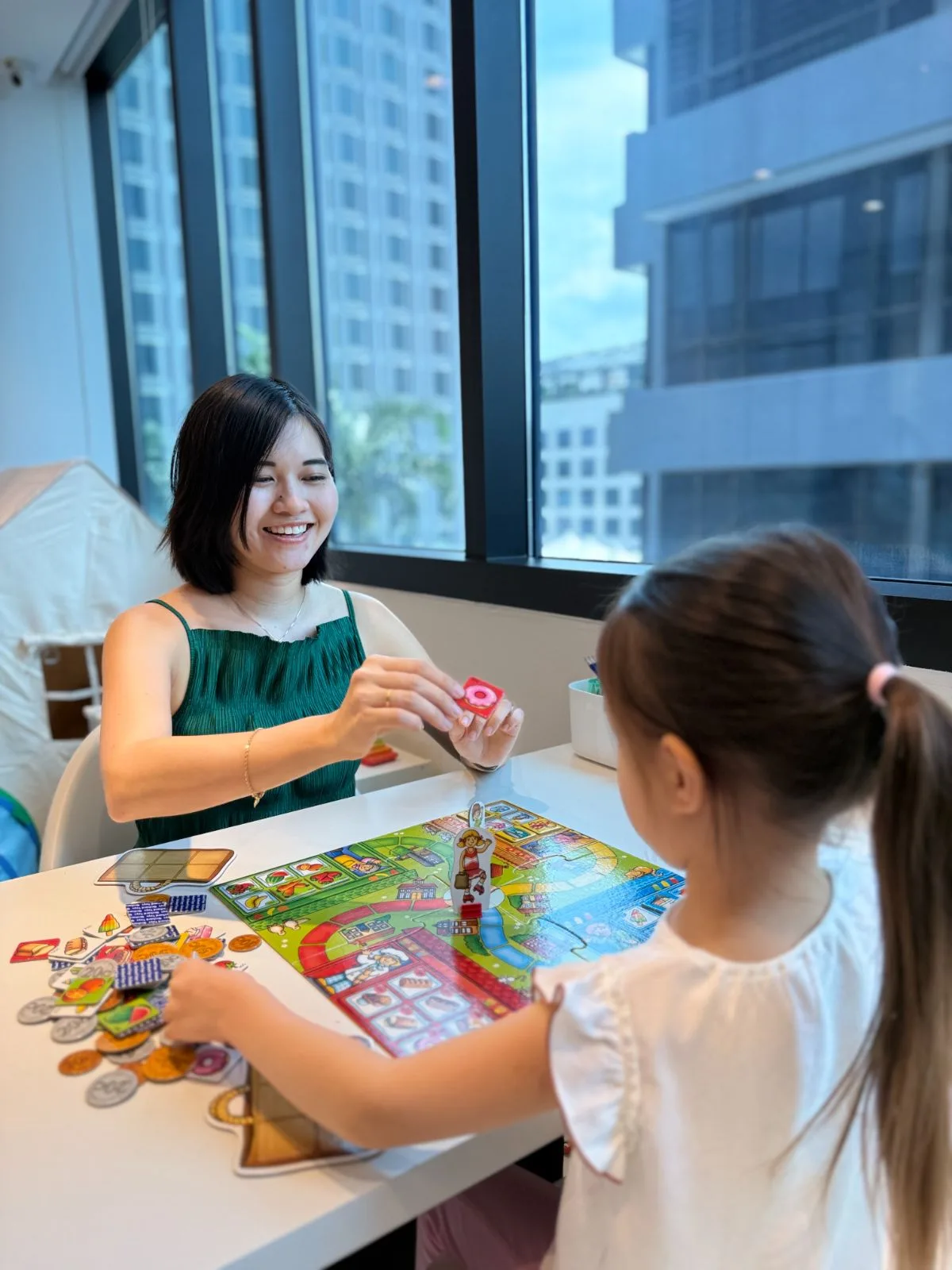
Our Approach to Speech Therapy in Singapore
Many therapy activities are naturally influenced by the physical space available. Our thoughtfully designed clinic — with spacious light-filled therapy rooms, outdoor spaces, access to an indoor playground — gives therapists greater flexibility to incorporate movement, sensory experiences, music, and play into sessions, allowing therapy to be tailored around each child’s interests and strengths. Four principles guide all our work:
Child-centred
Your child is at the heart of everything we do. Therapy is tailored to their needs, interests, and developmental stage, so they feel understood and supported.
Connection-driven
Strong relationships with your child and your family create a safe, nurturing environment where meaningful progress happens.
Progress-focused
We celebrate every step forward and honour your child’s unique pace of learning.
Evidence-based
Our methods are grounded in research and proven techniques, so your child receives effective, up-to-date care.
Who Is Speech Therapy For?
Our speech therapists are trained to help children who, compared to their peers:
We are experienced in working with children with Developmental Language Disorder (DLD), language delay, Speech Sound Disorder (including Childhood Apraxia of Speech), social communication disorder, dyslexia, Autism Spectrum Disorder (ASD), Auditory Processing Disorder (APD), ADHD, Global Developmental Delay (GDD), stuttering, voice disorders, and selective mutism.
Some children need more than one kind of support. If autism is part of your child’s story, our therapy for autism page explains how we grow communication and connection. If reading, spelling, or writing is the harder battle, our educational therapy programme builds literacy on the same language foundations, delivered by the same team.
What Happens in Our Speech Therapy Sessions
A conversation first
A free initial consultation over the phone or in person, where you share what you have noticed and we advise whether a full assessment makes sense.
A 1-hour assessment
A 15-minute parent interview, followed by 45 minutes of formal and informal assessment carried out in a child-friendly way. You are welcome to stay throughout.
A tailored therapy plan
Built from the assessment results, in collaboration with you, and aligned with your child’s and family’s goals.
Weekly sessions that look like play
Each 1-hour speech therapy session works towards your child’s goals through fun, engaging, evidence-based activities. Parents are welcome to sit in.
Parent guidance and support
We regularly share practical, easy-to-use strategies so progress carries over into everyday routines at home.
Progress you can see
Your child’s progress is monitored and documented every session, with a progress memo shared with you every 10 sessions or three months.
A team behind your therapist
Monthly case discussions with our wider team mean your child benefits from shared expertise and collective clinical experience.
Everyone on the same page
With your consent, we work closely with your child’s teachers and other professionals, so support stays consistent across home, school, and therapy.
Our Speech Therapists in Singapore
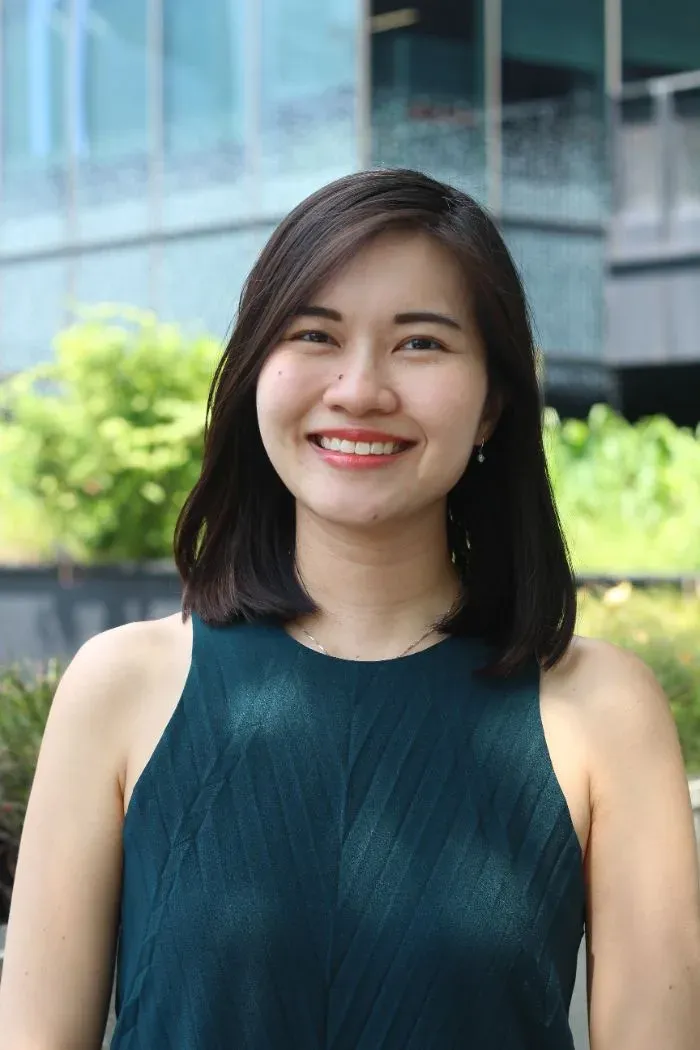
More than a decade of paediatric experience from infancy through adolescence, with advanced training in speech clarity work, including PROMPT, TalkTools oral placement therapy, and childhood apraxia of speech. She also lectures and supervises in the NUS speech pathology programme.
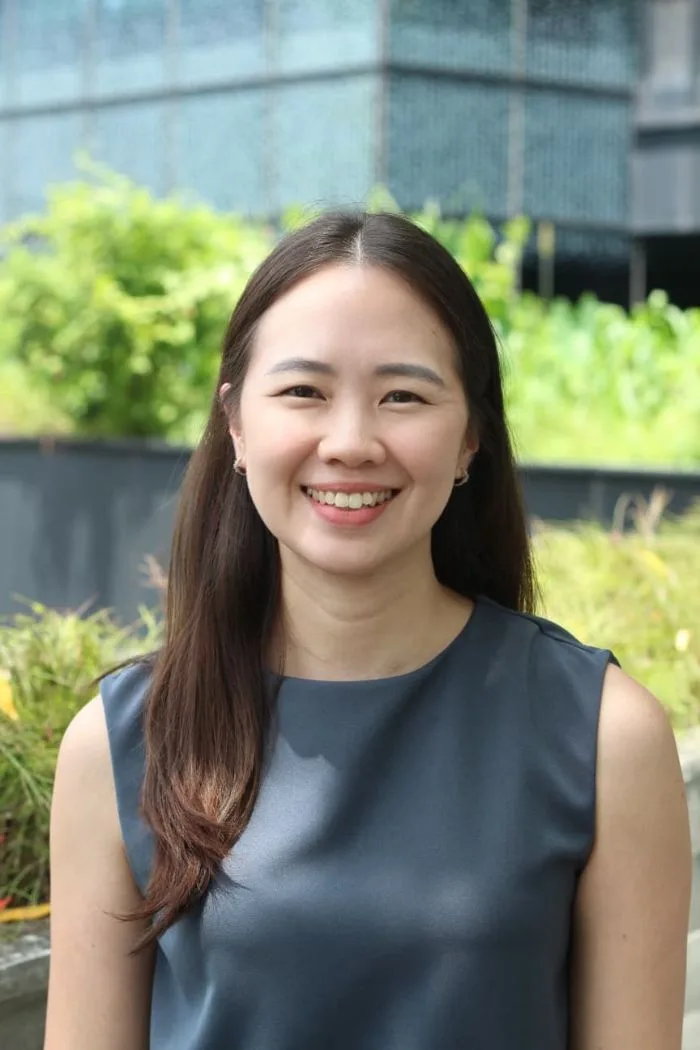
Master of Speech Pathology from Curtin University, supporting ages 2 to 17 across private clinics, special needs schools, and MOE specialised schools. Speech clarity, language development, and social communication are her core areas, with a particular interest in late talkers.
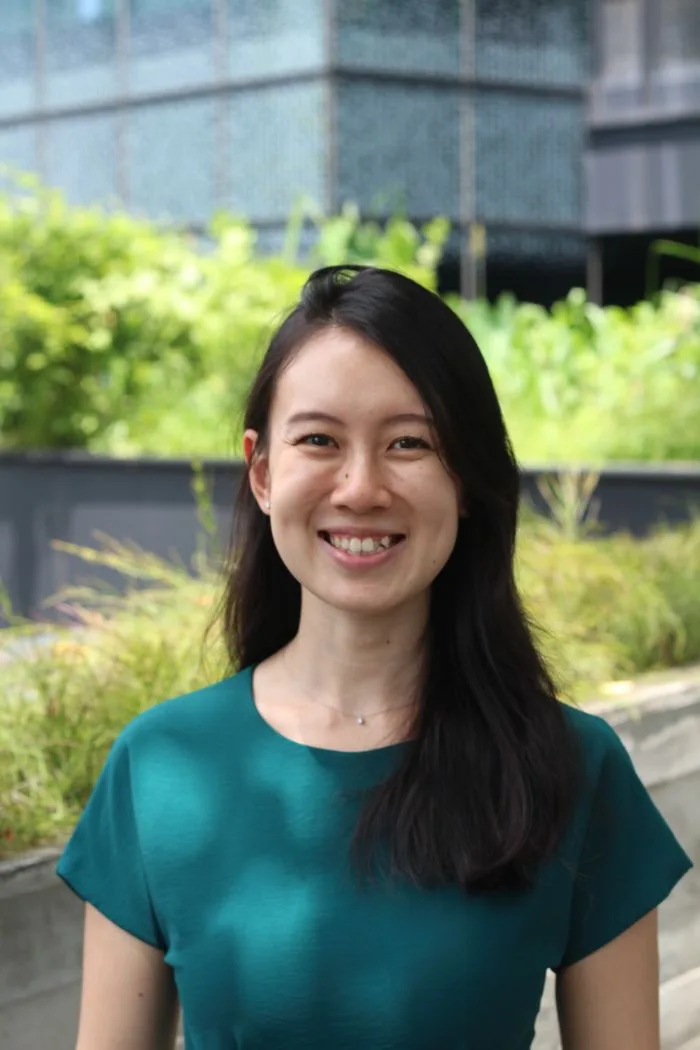
Eight years of experience with preschool and school-aged children, holding a Master of Science in Speech-Language Pathology from NUS with certifications in PROMPT, DTTC, and PECS. Families value how she equips the whole village around a child.
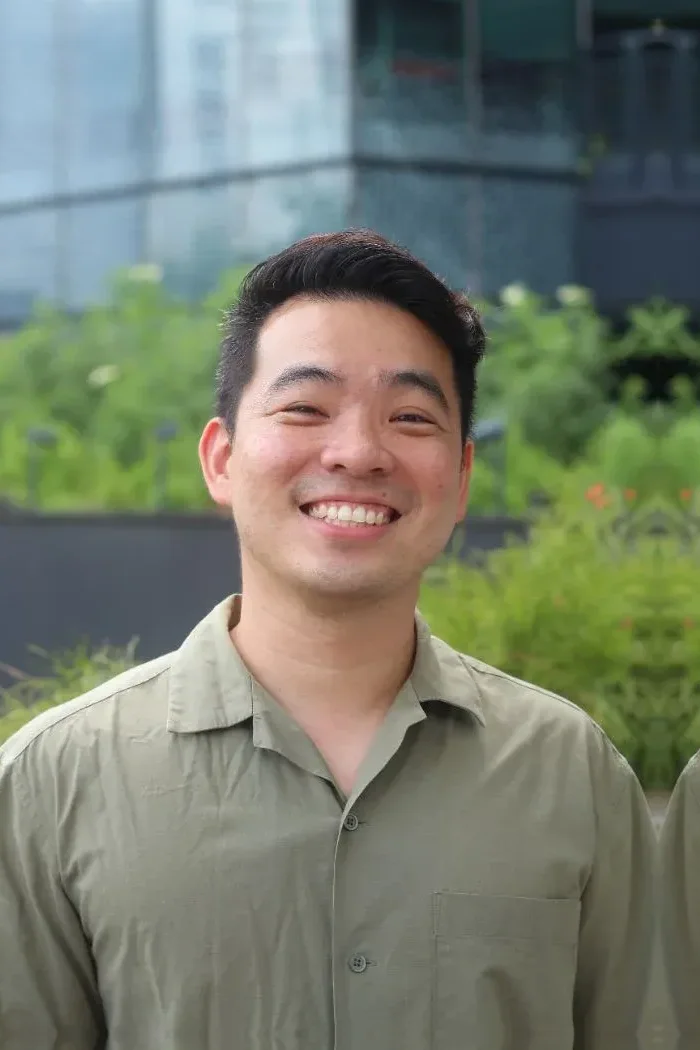
A University of Queensland graduate whose experience spans acute hospitals, outpatient clinics, and early intervention. Calm and patient, with a special interest in young children with speech and language delays.
What Parents Say
Here is what families tell us after working with our speech therapists:
Working with Xian Hui since the end of 2023 upon my son’s ASD diagnosis… his transformation has been remarkable, he now consciously spells words using correct sounds, and his social communication has improved. Most importantly he looks forward to attending the weekly session.
Teacher Tammy took the time to understand my child’s unique needs and worked diligently on the specific sounds he struggled with. The progress has been tremendous — and the invaluable tips she shares mean we can keep building his speech at home.
I could see the significant changes in her speech — clarity, confidence and articulation. Sounds she couldn’t pronounce at first, she now says out loud, and she even corrects herself. It improves her self-esteem every time she expresses her thoughts.
Speech Therapy FAQs
What exactly is speech therapy?
+
Speech therapy is professional support for communication: how a child understands language, uses words and sentences, pronounces sounds, and connects with people. A speech therapist assesses where your child is today, then builds the specific skills they need, from first words to clear speech to conversation and storytelling. At Beyond Speech, that work happens through play and the things your child already loves.
Who can speech therapy help?
+
Anyone whose communication is holding them back. As speech therapists in Singapore, we support infants through to teens: toddlers who are not talking yet, preschoolers whose speech is hard to understand, school-aged children who struggle to follow instructions or make friends, and teens working on fluency and social communication. Speech therapy also helps when communication needs come with a diagnosis such as autism, ADHD, dyslexia, or global developmental delay.
How do I know if my child needs speech therapy?
+
If your child is noticeably behind friends of the same age, if people outside the family struggle to understand them, if instructions keep getting lost, or if a teacher has raised a flag, that is reason enough to check. You do not need to be sure before reaching out. Our free initial consultation exists exactly for this conversation.
What is considered a speech delay?
+
A speech delay is when a child is not yet making speech sounds or using spoken words at the age most children do. Speech refers to the sounds a child makes, and language refers to the words they understand and use. A child may need support with one, the other, or both.
The table below shows some common milestones, as a general guide.
| Child’s age | Common milestones |
|---|---|
| Birth to 6 months | Reacts to noises, recognises familiar voices, and coos |
| 6 to 12 months | Babbles, responds to their name, understands simple words, and communicates with gestures |
| 12 to 18 months | Says 2 to 3 simple words, like “mama” and “dog”, and points to objects or body parts when named |
| 18 to 24 months | Says up to 50 words, and starts putting 2 words together, like “more water” |
| 2 to 3 years | Uses 2 to 4 word sentences, answers simple questions, and has a word for most objects |
| 3 to 4 years | Speaks in full sentences, and answers “who”, “what”, “when” and “where” questions |
Every child develops at their own pace, and a delay is not a diagnosis. If you are unsure, you may wish to check in with our speech therapists.
Is it normal that my 2 year old is not talking yet, or only saying a few words?
+
Many parents wonder about this, and it is a good question to ask early. The table below shows some common milestones around this age, as a general guide.
| Child’s age | Common milestones |
|---|---|
| 18 to 24 months |
|
| 2 to 3 years |
|
Every child develops at their own pace, so this table is a guide rather than a checklist. A 2 year old who is not yet talking, or who uses only a few words, may simply be developing more slowly in this area, and speech therapists call this late talking.
At this age, speech therapists don’t just look at the number of words that a child can say. Underlying pre-verbal skills, such as joint attention, imitation, and the use of gestures, are also important indicators of a child’s overall communication development.
During assessment, speech therapists consider these foundational skills alongside expressive vocabulary to understand how a child is communicating and identify areas that may need support.
Some late talkers catch up on their own, while others benefit from support. If you are unsure, you may check in with us. The first conversation is free, and if your child doesn’t need speech therapy, we will say so.
My child is a late talker. Will they catch up on their own?
+
Some late talkers do catch up. The honest answer is that nobody can tell you in advance which children will, and the toddler years are exactly when language grows fastest, so waiting has a real cost.
One of the earliest signs of language difficulty is often late talking. While some children eventually catch up in their ability to communicate their everyday needs, others continue to experience underlying language difficulties that become more noticeable as the demands of school increase.
These challenges may not be obvious in the preschool years but can emerge later in primary or secondary school, when children are expected to understand more complex instructions, learn new vocabulary, follow classroom teaching, and express their ideas through speaking and writing. In Singapore, where English is the main medium of instruction across almost all subjects, strong language skills are fundamental not only for English lessons but also for learning Mathematics, Science, and the humanities.
If your child is talking later than expected, it’s worth having their communication assessed early. An assessment doesn’t automatically mean your child needs therapy, but it can help identify whether their language development is on track, whether they simply need monitoring, or whether early support would be beneficial. Early intervention gives children the best opportunity to develop the communication skills they need before the gap widens.
At what age can my child start speech therapy?
+
We support children from infancy through the teenage years. For babies and young toddlers, support looks like coaching you, the parent, to build communication into daily routines. For older children, therapists work with your child directly. If you are wondering whether it is too early, that usually means it is the right time to ask.
My child is non-verbal. Can speech therapy still help?
+
Yes. Communication begins long before words. Our therapists build the foundations that speech grows from, like shared attention, imitation, and turn-taking in play, and where helpful we bring in picture-based systems such as Proloquo2go, TouchChat, or PECS so your child can express their needs, thoughts and feelings in alternative ways. Communication first, in whatever form works for your child. Then we build from there.
Can speech therapy help with stuttering?
+
Yes. Stuttering is one of the needs our speech therapists are experienced in supporting. For younger children, therapy often works through parents and play. For older children, we work directly on fluency and on keeping speaking something your child enjoys rather than fears. If stuttering has appeared and stayed for a few months, an assessment will tell you whether to act now or simply monitor.
What happens during a speech therapy session?
+
Each 1-hour session is planned around your child’s goals and interests, so from your child’s side it mostly feels like games, stories, and play with a therapist who gets them. Underneath, every activity targets specific speech or language skills. You are welcome to sit in, and if applicable, part of each session is spent sharing strategies you can use at home during the week.
How many speech therapy sessions per week does a child need?
+
Most children attend one session a week. Some benefit from a more intensive start, and others taper to fortnightly as skills consolidate. We recommend a frequency after your child’s assessment, and honestly, consistency plus daily practice at home moves the needle more than stacking extra hours in the clinic.
Wondering how long the whole journey takes? Our article on how many speech therapy sessions a child needs walks through what shapes the number.
How much does speech therapy cost in Singapore?
+
Speech therapy at Beyond Speech is $230 per hour on weekdays and $250 per hour on weekends, with 10-session packages at $2,185 and $2,375 respectively. Home-based sessions are $280 per hour. Every journey starts with a free initial consultation, followed by a 1-hour assessment at $230 on weekdays or $250 on weekends. You can view all rates on our fees page, or message us on WhatsApp about our ongoing promotions.
Wondering what affects the price and how costs compare across Singapore? Our article on speech therapy costs in Singapore covers the full picture.
What are the qualifications of speech therapists?
+
A qualified speech therapist should have completed a recognised Bachelor’s or Master’s degree in Speech and Language Therapy (or Speech Pathology) and meet the registration or licensing requirements of the country they practise in. Many also pursue additional training and certifications in specialised areas to deepen their expertise and stay up to date with evidence-based practice.
You do not have to figure it out alone.
Whether you have a diagnosis in hand, a niggling worry, or just a question, you do not have to figure it out alone. We are here to listen, answer your questions, and help you understand the next steps. The first conversation is free.
Prefer to write to us? Leave us a message below and we will get back to you soon.