How Much Does Speech Therapy Cost in Singapore? (2026)
Beyond Speech Team20 Aug 2026 · 6 min read
Key Takeaways
Speech therapy fees in Singapore depend on the setting. Public hospitals, social service agencies, and private clinics all price differently.
Most private clinics charge around $180 to $300 per hour. Beyond Speech publishes its fees in full on the Our Fees page.
Speech therapy is usually priced in two parts: a one-time assessment, then a per-session fee for ongoing therapy.
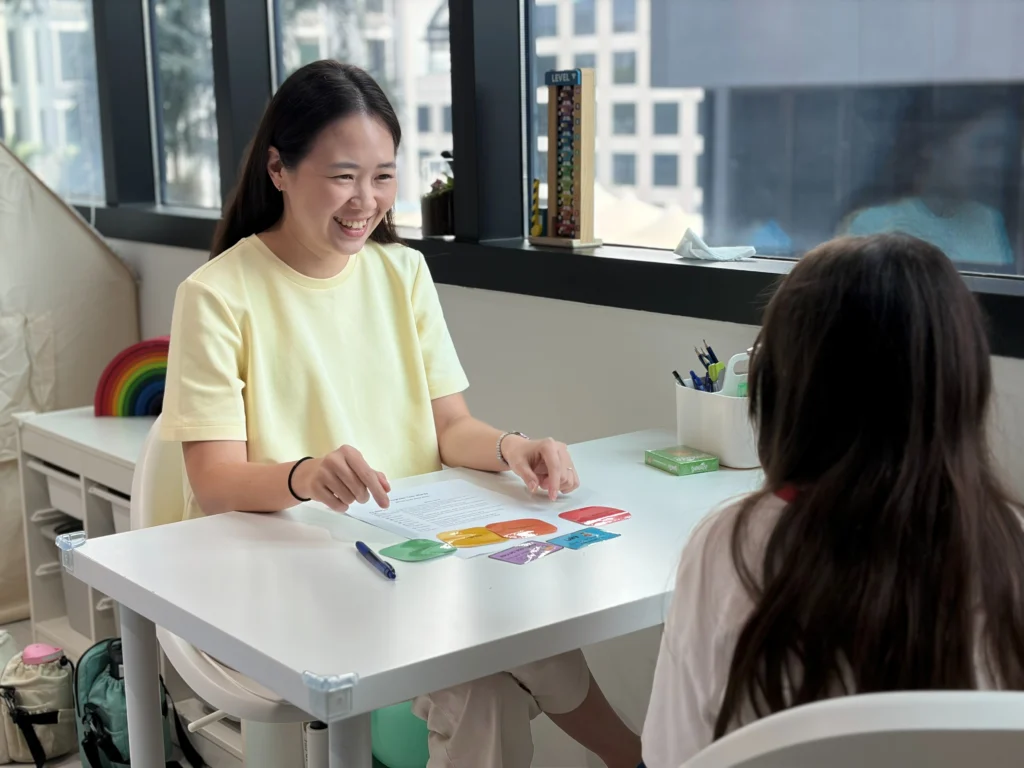
The fee covers more than the hour. A tailored therapy plan, parent coaching, and session documentation are part of what you pay for.
Most children start with weekly sessions. The total depends on the area of concern, your child’s profile, and your family’s goals.
At Beyond Speech, it starts with a free phone call. Then a face-to-face assessment, and therapy is recommended only if it is needed.
If you are exploring speech therapy for your child, cost is usually one of the first questions. It is also one of the hardest to get a straight answer to.
Fees vary widely, and not every clinic publishes them. This guide lays out what speech therapy costs in Singapore, what affects the price, and how many sessions children typically need.
What speech therapy costs in Singapore
The honest answer: it depends on the setting. Speech therapy here is delivered through public hospitals, social service agencies, and private clinics, and each prices very differently.
Public hospitals
Speech therapy at public hospitals is accessed through a doctor. At KK Women’s and Children’s Hospital, for example, your doctor evaluates whether speech therapy is appropriate, then makes a referral.
Subsidised rates are available for Singapore Citizens and Permanent Residents referred through a polyclinic, a public hospital, or a CHAS GP. The level of subsidy depends on means testing.
Social service agencies
For younger children with developmental needs, government-funded early intervention can cost less than private therapy. Programmes such as EIPIC are means-tested and accessed through a paediatrician’s referral.
Private clinics
Private practices offer the fastest access, and the most flexibility over scheduling and therapist choice. Fees are unsubsidised.
From our understanding of the market, most private clinics in Singapore charge around $180 to $300 per hour for speech therapy. Many clinics do not publish their fees, so always ask what is included.
Beyond Speech’s rates
We publish our fees in full, because families deserve to know exactly what therapy costs before they commit. Speech therapy is priced in two parts:
Session
Weekday
Weekend
Speech therapy — per hour
$230
$250
Speech therapy — 10 sessions (5% cheaper)
$2,185
$2,375
Home-based therapy — per hour
$280
$280
Home-based therapy — 10 sessions (5% cheaper)
$2,660
$2,660
A one-time assessment. One hour at $230 on weekdays or $250 on weekends, covering a parent interview plus formal and informal assessment of your child.
Ongoing therapy sessions. $230 per hour on weekdays and $250 on weekends, with ten-session packages at $2,185 and $2,375 that save roughly 5 percent.
Home-based sessions are $280 per hour, flat across the week. Before any of that, every journey starts with a free initial consultation, and the full breakdown is on our fees page.
What affects the price
Three factors explain most of the variation you will see.
The type of organisation.
Public hospitals offer subsidised rates but require a doctor’s referral, and government-funded programmes are means-tested. Private clinics charge full fees, in exchange for direct access and continuity with one therapist.
The setting.
While we do not charge a registration fee, some clinics may impose a separate registration fee. In-clinic sessions are the baseline, while home-based therapy costs more because travel time is built into the fee. School-based sessions, where suitable, let therapy happen inside your child’s day and help skills carry over into the classroom.
The therapist’s experience, and what the fee includes.
An hour is never just an hour. Behind each session sits planning, analysis, and documentation. Clinics may state different rates for different therapists, based on their level of experience
At Beyond Speech, every session fee includes a therapy plan tailored to your child’s goals, practical parent coaching, and documented progress. You can read more about how our speech delay therapy sessions work.
How many sessions will my child need?
This shapes the total cost far more than the hourly rate does. There is no single honest number, because it depends on three things.
The area of concern.
A child working on one or two specific speech sounds may need a shorter block of therapy. A child building understanding and use of language across the board will usually need longer.
Your child’s profile.
Autistic children, for example, often work on broader functional communication goals, so support may run more frequently or for longer. Our therapy for autism page explains this in detail.
A child’s temperament and character can significantly influence how they respond to, engage with, and progress through therapy. Therefore, the therapist needs time to understand the child as an individual and to establish a sense of safety, trust, and rapport before meaningful therapeutic progress can take place.
Your family’s goals.
Therapy is built around what matters most at home and in school, and we set those goals together with you.
Most children start with weekly sessions, reviewed regularly as they progress. We will typically advise you on the likely timeline after about three months, once we have got to know your child properly.
You will not be guessing in the meantime. Progress is documented every session, and you receive a progress memo every 10 sessions or three months.
Speech therapy or educational therapy?
Sometimes the bigger cost question is not how much, but which service. Speech therapy supports communication: understanding language, using words and sentences, speech clarity, and connecting with people.
Educational therapy supports learning: reading, spelling, comprehension, and writing. It is the right path when literacy is the harder battle, including for children with dyslexia.
The two are priced differently, as the table below shows.
Some children need support in both areas. Our integrated Speech and Educational Therapy programme addresses both in one coordinated plan, with one therapist who is certified in both aspects.
Paying for the right service matters more than paying for more sessions. If you are not sure which fits, that is exactly what the first conversation is for.
The next step
At Beyond Speech, it starts with a free phone call, where we listen and get to understand your child and your family’s needs. From there, we arrange a face-to-face assessment.
We recommend therapy sessions only if they are needed, and we tell you when they are not. Reach us through our contact page or message us on WhatsApp.
Wondering how early intervention works for autistic children in Singapore? Our article covers the early signs, the support options available, and how to start.
Tammy WongClinical Director, Principal Speech Therapist23 Sep 2026
Wondering how many speech therapy sessions your child needs? Our article covers what decides the frequency, typical timelines, and how progress is reviewed.
Seet Xian HuiClinical Director, Principal Speech Therapist17 Sep 2026
A parent's guide to how autism shapes communication and how speech therapy helps, covering echolalia, gestalt language processing, AAC, and caregiver training.
Tammy WongClinical Director, Principal Speech Therapist25 Aug 2026

 Tammy WongClinical Director, Principal Speech Therapist23 Sep 2026