Speech Therapy for Children With Autism: A Parent’s Guide
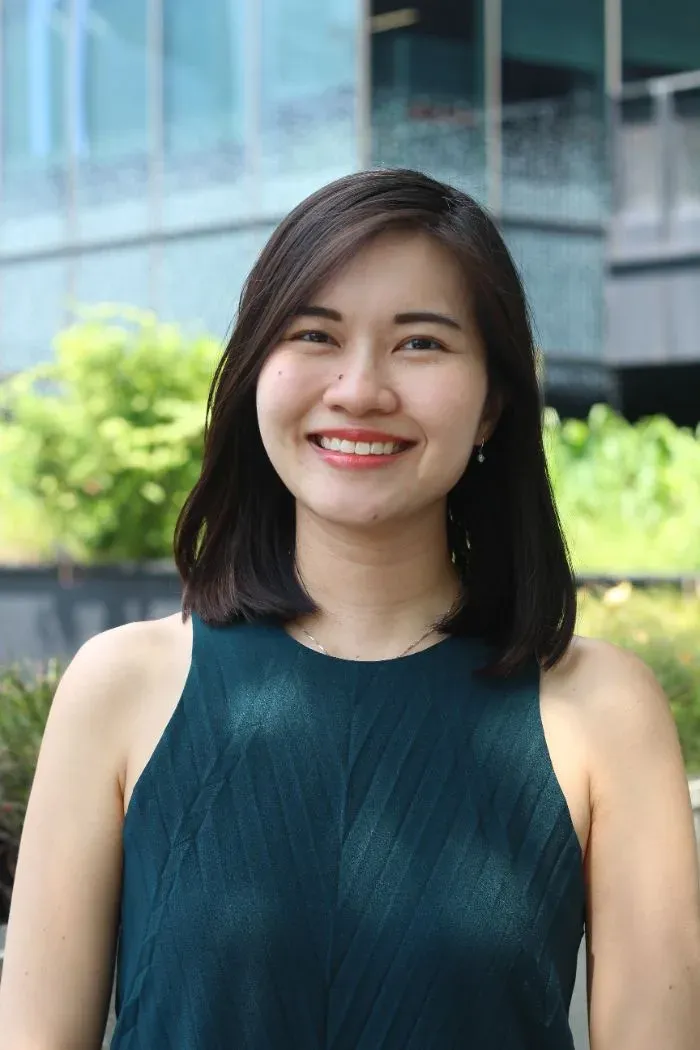
Tammy WongClinical Director, Principal Speech Therapist25 Aug 2026 · 7 min read
Key Takeaways
Autism affects more than speech sounds. It shapes social communication, understanding, and how a child connects with others.
Many autistic children are gestalt language processors. They learn language in whole chunks and scripts first, then build toward flexible, original speech.
Speech therapy for autistic children focuses on functional communication, not just talking. That includes gestures, visuals, and AAC where helpful.
Research shows AAC does not hold back spoken language. It gives your child a way to be understood now.
Caregivers are part of therapy. Parent coaching turns everyday moments at home into practice.
Starting early gives your child more time to build communication, and it is never too late. If you are unsure, start with a free phone consult.
Some autistic children also benefit from reading support alongside speech therapy.
Maybe your child has just been diagnosed with autism. Or maybe you are still waiting for an assessment date, wondering what comes next.
Either way, speech therapy is likely to be one of the first supports recommended. This guide explains how autism affects communication, what therapy works on, and how to take the first step.
How autism affects speech and communication
Autism affects more than speech sounds. It shapes how a child understands language, how they connect with others, and how they share what is on their mind.
Every autistic child is different. But parents often notice some of these:
Few or no words by 18 months, or first words that appeared and then faded
Difficulty with back-and-forth interaction, such as responding to their name, sharing attention, or taking turns in play
Repeating phrases from shows or conversations, sometimes long after hearing them
Strong understanding in some areas, alongside real difficulty following everyday instructions
Communicating mainly by leading adults by the hand to what they want
Why repeated phrases matter
That repetition of phrases is called echolalia, and it is widely misunderstood.
When your child repeats a line from a favourite show, they are often communicating something real. Even when the words do not match the situation exactly.
Many autistic children are gestalt language processors. They pick up language in whole chunks first: a line from a show, a phrase a parent uses, a whole question learned as one unit.
Those scripts carry meaning for the child, and they are a genuine stage of language development. With the right support, children gradually break their scripts into parts and recombine them into flexible, original language.
Our speech therapists in Singapore are trained in gestalt language support, and work with your child’s scripts rather than against them. A checklist is never a diagnosis, but if several of these feel familiar, they are worth talking through with a speech therapist.
What speech therapy works on for autistic children
Speech therapy for autism is about functional communication. The goal is to give your child reliable ways to be understood, in whatever form works for them.
Depending on your child’s profile, therapy may work on:
Functional communication: requesting, refusing, greeting, and commenting. The everyday communication that shrinks frustration and grows connection.
Understanding language: following instructions, questions, and routines at home and in school.
Social communication: sharing attention, taking turns, and play skills. For older children, conversations and friendships.
Speech clarity, for children who speak but are hard to understand.
AAC, where helpful
Some children have few or no spoken words, and AAC gives them a real voice. That includes picture systems such as PECS, communication boards, sign language, and speech-generating apps such as Proloquo2Go and TouchChat.
Parents often worry that using AAC will stop a child from talking, but research points the other way. AAC does not hold back spoken language, and it gives your child a way to be understood now.
Caregiver training
Parents and caregivers are part of therapy, not observers. You will be coached on strategies that fit your daily routines, so everyday moments become practice.
At Beyond Speech, this runs through every session. Our team also includes certified Hanen More Than Words Program Leaders.
More Than Words is a structured programme for parents of autistic children, combining group sessions with individual visits and video feedback. We also run parent training and workshops for families who want to go deeper.
When to start
Starting early matters. It gives your child more time, and more everyday opportunities, to build communication before school demands increase.
Just as important, it is never too late. Autistic children keep developing communication skills across childhood and beyond.
In Singapore, younger children with developmental needs may be eligible for government-funded early intervention such as EIPIC, accessed through a paediatrician.
Many families combine or choose private therapy for direct access and continuity with one therapist.
If you are unsure where your child stands, you do not need to figure it out alone. Start with a free phone consult with a speech therapist.
What a session looks like at Beyond Speech
Therapy for autistic children at Beyond Speech is led by qualified speech therapists. It is built around one idea: children learn communication fastest inside moments they enjoy.
The journey looks like this:
A free phone call first. You share what you have noticed, and we come to understand your child and family’s needs.
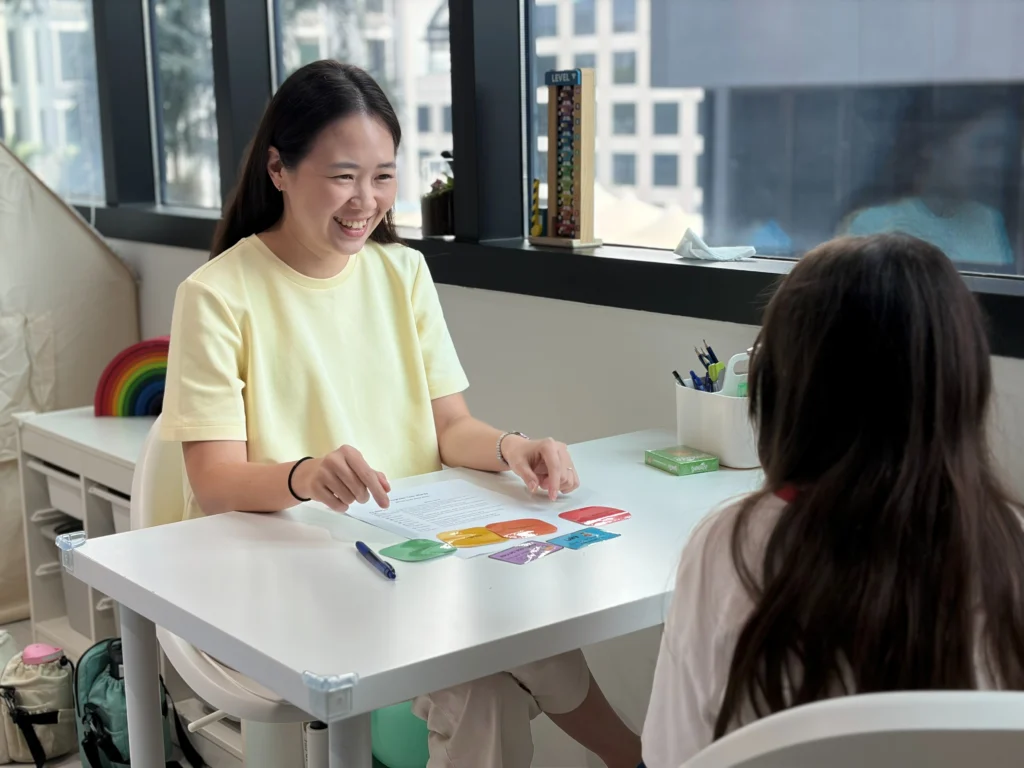
A one-hour face-to-face assessment: a parent interview plus formal and informal assessment done through play. You are welcome in the room throughout.
A plan built around your child, with goals set together with you and shaped by what matters most at home and in school.
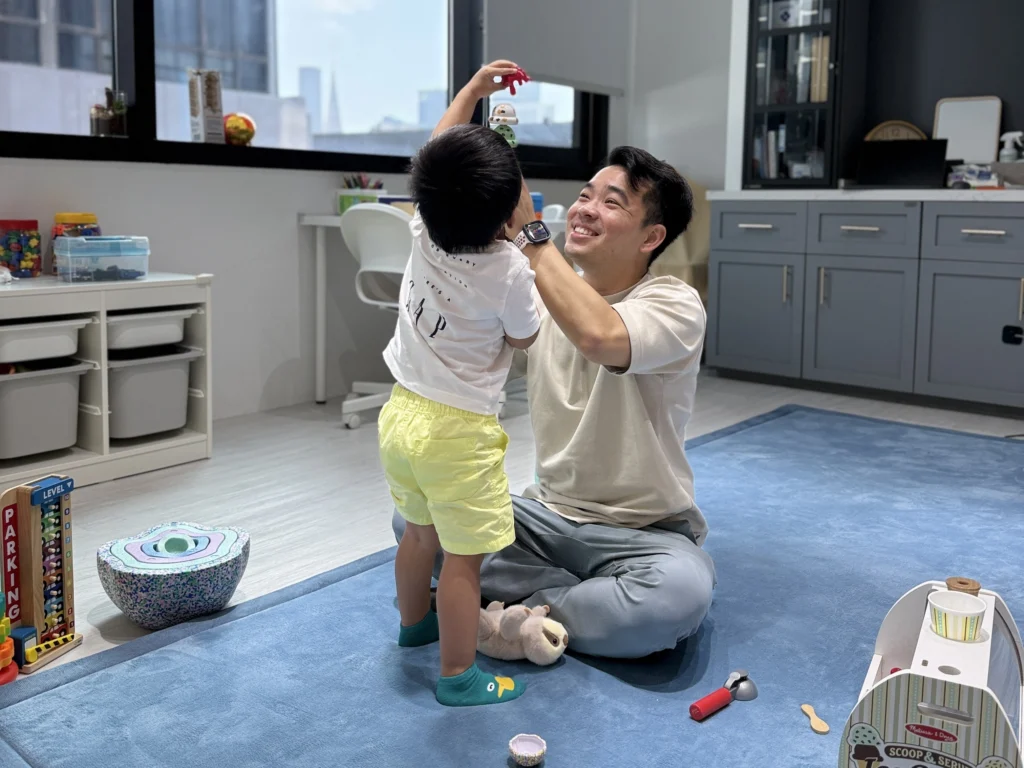
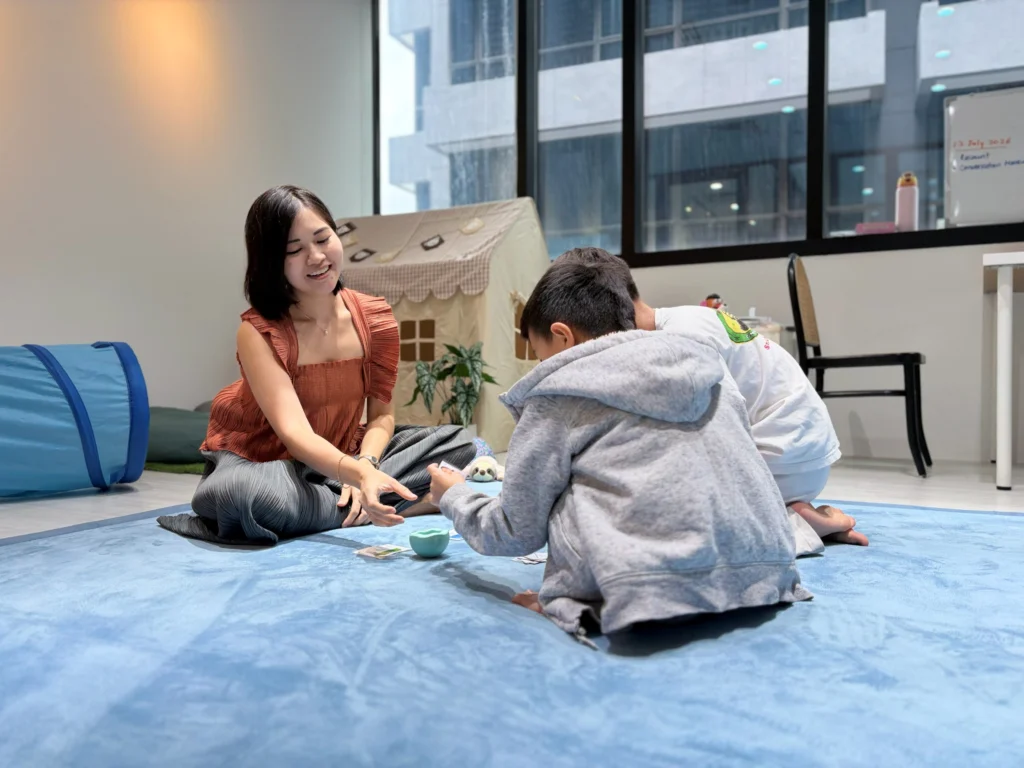
Weekly sessions that look like play, built on your child’s interests. Sessions are sensory-informed, so they respect how your child regulates.
Coaching for you inside each session, so strategies carry home.
Progress you can see. Every session is documented, and a progress memo is shared every 10 sessions or three months.
How long until you see progress
The honest answer: progress is gradual, and no honest therapist promises a fixed timeline. Most children attend weekly, with goals reviewed continuously.
We will typically advise you on the likely road ahead after about three months, once we know your child well.
Early progress often looks small: more attempts to communicate, fewer meltdowns born of frustration, new ways to ask or greet. Those small shifts compound.
What we will never do is promise an overnight fix. Be careful with anyone who claims otherwise.
What it costs
Therapy for autistic children runs through our standard speech therapy sessions.
Session
Weekday
Weekend
Speech therapy — per hour
$230
$250
Speech therapy — 10 sessions (5% cheaper)
$2,185
$2,375
Home-based therapy — per hour
$280
$280
Home-based therapy — 10 sessions (5% cheaper)
$2,660
$2,660
Ten-session packages save roughly 5 percent, and home-based rates are flat across the week.
The journey starts with a free phone consultation, followed by a one-hour assessment at $230 on weekdays or $250 on weekends. Full rates are on our fees page. Our guide to speech therapy costs in Singapore explains what drives the numbers.
Some autistic children also find reading, spelling, or writing harder than expected. That is where educational therapy comes in.
It is structured literacy support, built on approaches such as Orton-Gillingham and taught explicitly and cumulatively. Skills stack instead of slipping away.
At Beyond Speech, educational therapy is delivered by the same speech-therapist team, trained in both language and literacy. So communication support and reading support work side by side, not in separate silos.
The next step
Start with a free phone consult with a speech therapist. Tell us what you have been noticing, and we will listen.
From there, we arrange a face-to-face assessment, and recommend therapy sessions only if your child needs them. Reach us through our contact page or message us on WhatsApp.
Wondering how early intervention works for autistic children in Singapore? Our article covers the early signs, the support options available, and how to start.
Tammy WongClinical Director, Principal Speech Therapist23 Sep 2026
Wondering how many speech therapy sessions your child needs? Our article covers what decides the frequency, typical timelines, and how progress is reviewed.
Seet Xian HuiClinical Director, Principal Speech Therapist17 Sep 2026
A guide to speech therapy costs in Singapore across public, subsidised, and private settings, what affects the price, and how many sessions children need.

 Tammy WongClinical Director, Principal Speech Therapist23 Sep 2026